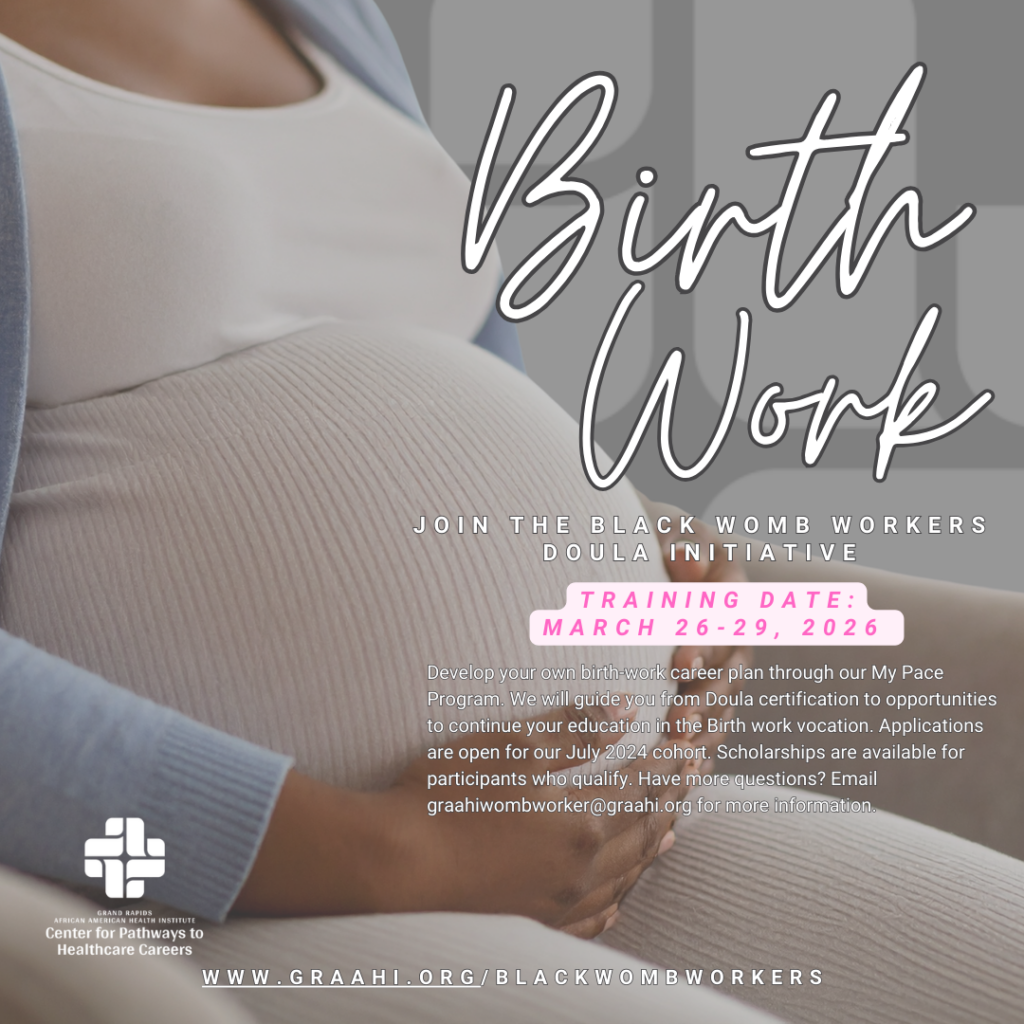
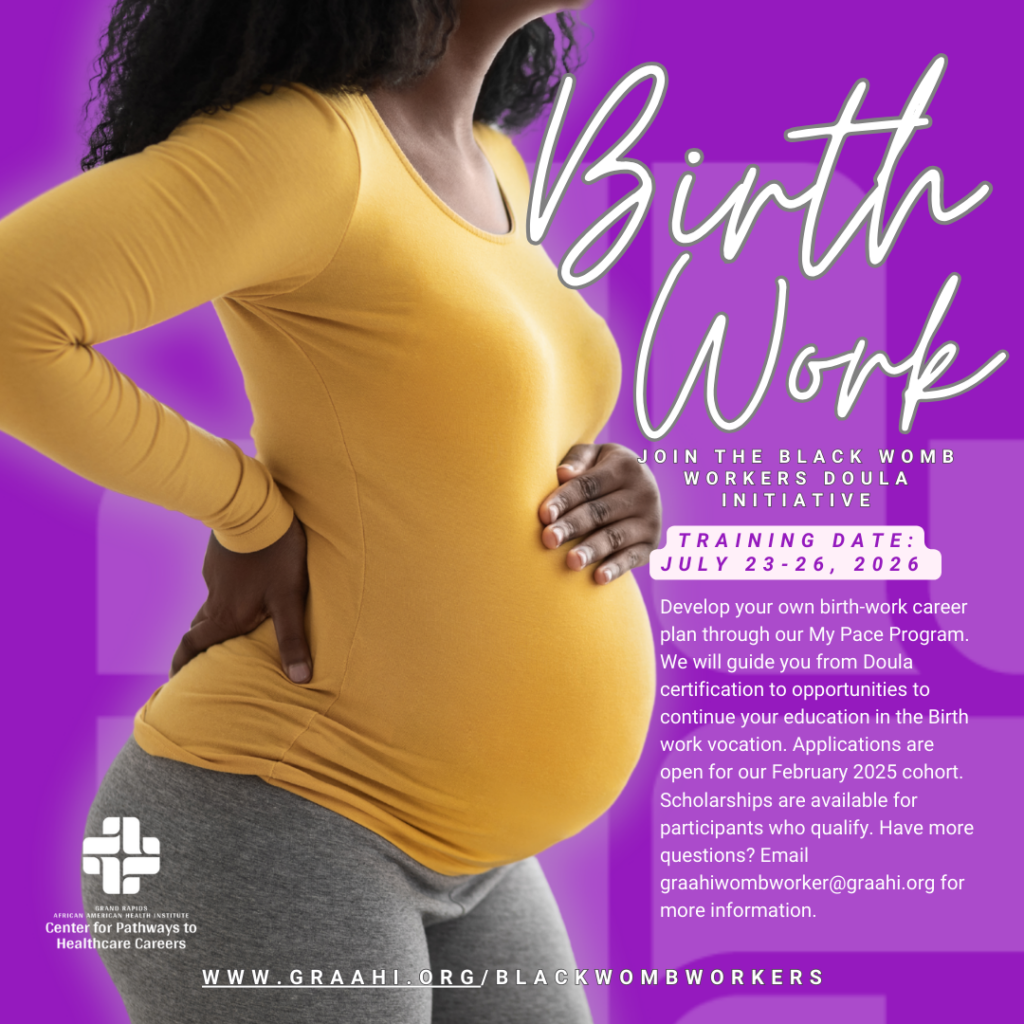
Black Womb Workers is our doula initiative focused on advancing equitable birth outcomes for Black families. Through culturally grounded support and advocacy, we work to address systemic factors that negatively impact maternal and infant health.
Doulas offer continuous emotional, physical, and informational support throughout pregnancy, birth, and postpartum to help ensure birthing individuals feel informed, empowered, and supported every step of the way. Join one of our cohorts to earn your certifications and develop your own birth-work career plan.
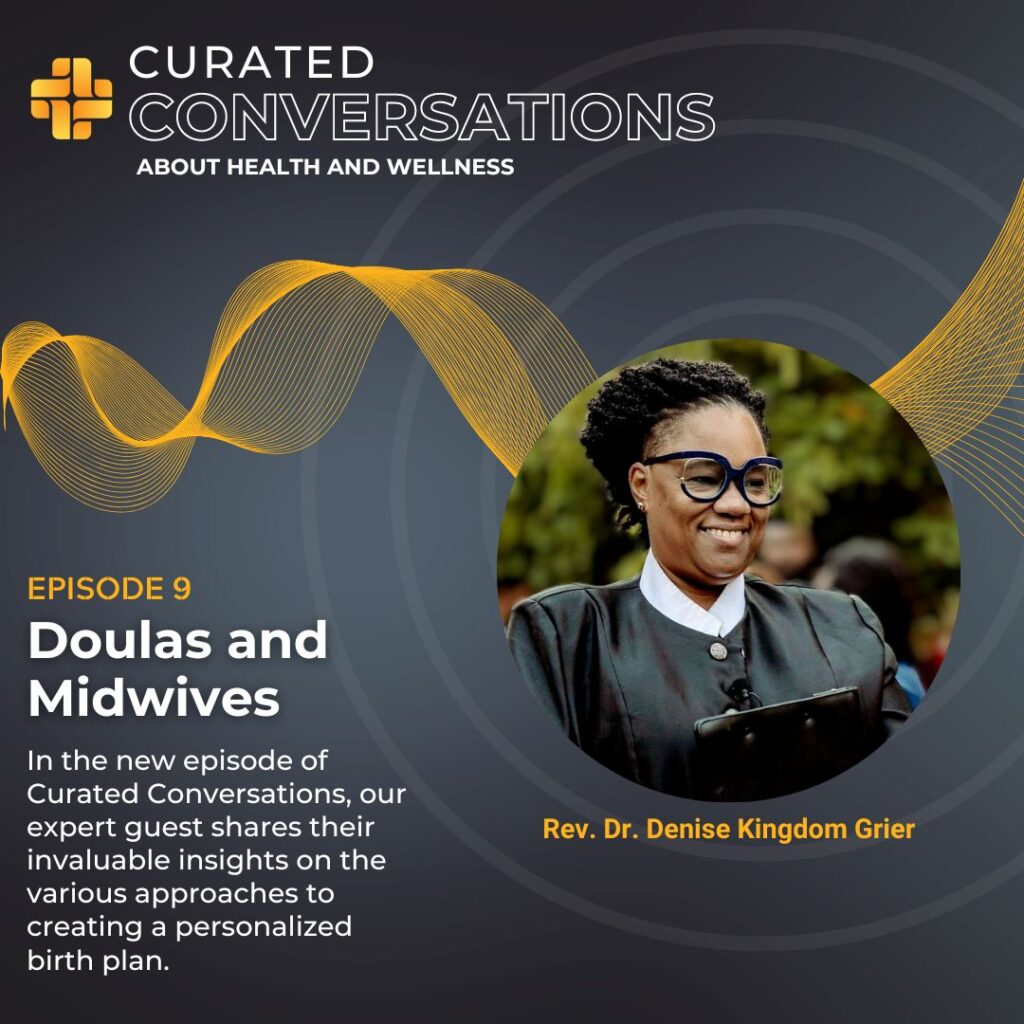
Your voice matters in the birthing process. In our podcast episode, a guest expert shares insights on how to approach birth planning with clarity, confidence, and intention.
To support you further, we offer a downloadable birth plan guide designed to help you outline your preferences and prepare for meaningful conversations with your care team.
60% of the national maternal morbidity cases are preventable.
Nationally, Black women in the US are three to four times more likely to die of pregnancy-related complications and have twice the severe maternal morbidity rate compared to non-Hispanic white women.
Cardiac and coronary conditions were the leading (15.2%) causes of pregnancy-related deaths for Black women.
Between 2010-2020, Black infants had the highest rates of mortality: they were 2.8 times more likely to die than white infants statewide.
In the Kent County FIMR report, from the years 2019-2021 Black infants were 3.6 times more likely to die than white infants.
Black Womb Workers - Doula Initiative
In 2019, GRAAHI published a comprehensive scoping review of infant and maternal mortality and morbidity in the Black and African American community. The data revealed that Kent County, the fourth-largest county by population in Michigan, reported the Black infant mortality rate “was significantly higher than the White infant mortality rate throughout the decade from 2010-2020” (Brown, et. al., 2022). The Kent County Fetal Infant Mortality Review team developed a complimentary report called, “Celebrating More First Birthdays”. In this report, the zip code 49507 had the highest infant mortality rate, with 49509, 49503, 49508, and 49548 ranking the highest infant mortality in Kent County. The highest causation of these deaths within these specific zip codes revealed that “. Black and Hispanic infants most commonly died of prenatal issues which are most likely attributed to the health of the mother during pregnancy.” (VanScoy, 2024).
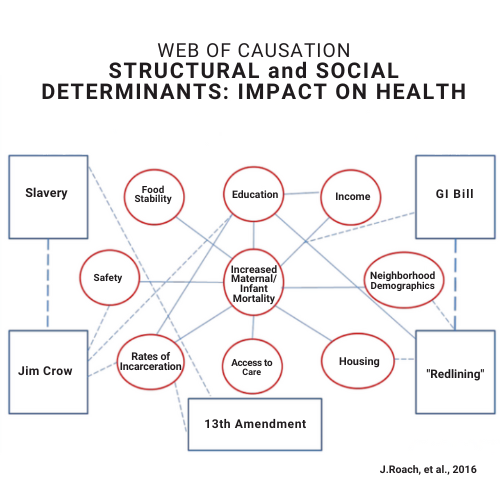
The Black Womb Workers is GRAAHI’s Doula Initiative to support the closure of social determinants, such as racism, implicit bias, and socioeconomic status, that negatively impact birth outcomes for birthing individuals and babies. Doulas are trained birth professionals who help individuals have positive birth experiences by providing non-clinical emotional, physical, and informational support before, during, and after birth. Studies show that doulas improve social determinants of health, support equity, decrease existing health and racial disparities in infant and maternal health, and ultimately, improve birth outcomes for both baby and birthing individuals.
GRAAHI acknowledges how social determinants of health impact how birthing individuals navigate the healthcare system and how critical advocacy and education are in developing equities for Black and African American Infant and Maternal Health. From 2016-2021, the leading cause of infant death was prenatal care, and social determinants of health created a disproportionate burden of loss for maternal health.